top of page


Vitamin D
The Sunshine Hormone Essential for Immunity and Bone Health
Vitamin D is a fat-soluble vitamin that acts more like a hormone in the body, primarily synthesized in the skin upon exposure to Ultraviolet B (UVB) rays from sunlight. It is crucial for maintaining the balance of calcium and phosphorus, making it indispensable for bone health.
Due to modern lifestyles, geographical location, and increased indoor time, Vitamin D deficiency is widespread globally, making supplementation with Vitamin D3 (Cholecalciferol) a common and necessary strategy for optimal health.
Benefits of Vitamin D
Vitamin D’s benefits extend far beyond bone health, influencing immune response, mood, and potentially chronic disease risk.
Key Benefits
a) Skeletal Health: Enhances the absorption of calcium and phosphate in the intestine, which is critical for maintaining strong bones, preventing loss of bone density (osteoporosis), and preventing softening of bones (osteomalacia).
b) Immune System Modulation: Supports a healthy immune response by regulating immune cells, potentially playing a role in reducing the risk of respiratory infections and autoimmune disorders.
c) Muscle Function: Essential for muscle strength and preventing muscle weakness and spasms.
d) Mood and Cognitive Function: Receptors for active Vitamin D are found in the brain, suggesting roles in supporting mood and potentially reducing the risk factors associated with depression.
Mechanism of Action
Vitamin D is a pro-hormone that must be activated by the body:
a) Metabolism to Active Form: Whether synthesized in the skin or consumed via supplement (Vitamin D3), it is first converted in the liver to 25-hydroxyvitamin D (calcidiol, the form measured in blood tests). It is then activated in the kidneys to 1,25-dihydroxyvitamin D (calcitriol), the most active form.
b) Calcium Homeostasis: The active form binds to the Vitamin D Receptor (VDR) in the small intestine, triggering genes that enhance calcium absorption from the diet into the bloodstream. This prevents the parathyroid glands from pulling calcium out of the bones.
c) Immune Regulation: VDRs are found on various immune cells. Binding here allows Vitamin D to influence the production of antimicrobial peptides and regulate the balance between pro- and anti-inflammatory immune responses.
Related Statistics (RDA & Deficiency)
a) Recommended Daily Allowance (RDA) for Adults (19–70 yrs): 600 IU (15 mcg) per day.
b) RDA for Adults (71+ yrs): 800 IU (20 mcg) per day.
c) Deficiency Threshold: Serum levels of 25(OH)D below 20 ng/mL are considered deficient for bone health, while levels between 20 and 30 ng/mL are often considered insufficient.
d) It is estimated that nearly 50% of the global population is Vitamin D deficient or insufficient.
Signs of Vitamin D Deficiency
Due to its widespread roles, deficiency often manifests through subtle, chronic symptoms that can be easily overlooked.
a) Bone Pain and Weakness: Generalized aches, joint pain, or persistent lower back pain. In severe cases, it leads to Osteomalacia (softening of bones) in adults and Rickets in children.
b) Muscle Weakness: Chronic weakness, muscle aches, or frequent spasms.
c) Fatigue and Lethargy: Persistent, unexplained tiredness and low energy.
d) Impaired Immune Function: Increased frequency of respiratory infections or colds.
e) Low Mood: Observational links suggest a correlation between low Vitamin D levels and increased risk of depression or Seasonal Affective Disorder (SAD).
Forms and Bioavailability
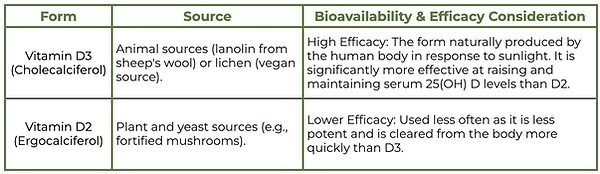
Vitamin D supplements come primarily in two forms, with Vitamin D3 being the superior choice due to its effectiveness in raising blood levels.
Note: As a fat-soluble vitamin, absorption is maximized when taken with a meal or snack containing dietary fat.
Natural Food Sources
Few foods naturally contain significant amounts of Vitamin D, making sunlight and fortified products key to intake.
a) Fatty Fish: Salmon (especially wild-caught), tuna, mackerel, and cod liver oil are the best natural sources.
b) Fortified Foods: Milk, breakfast cereals, some yogurts, and orange juice are often fortified with Vitamin D.
c) Mushrooms: Some mushrooms, particularly those treated with UV light, can contain high levels of Vitamin D2.
d) Egg Yolks: Contain small amounts.
Regulatory Status and Market Trends
Regulatory Status:
Vitamin D is regulated as a Dietary Supplement in the U.S. and is often included in food fortification programs worldwide (like milk fortification). Due to its hormonal function, high-dose prescriptions are used to treat severe deficiency.
Market Trends:
The Vitamin D market is robust and growing (CAGR of approximately 8–9%), fueled by:
a) Immune Health Focus: Sustained interest in Vitamin D’s role in immune support post-pandemic.
b) D3 Dominance: Vitamin D3 accounts for the largest share of the market due to its superior efficacy.
c) Form Factor Innovation: Strong growth in non-pill forms like gummies, chewables, and liquid drops for easier compliance, especially among children and older adults.
d) K2 Combination: Increasing popularity of supplements combining Vitamin D3 with Vitamin K2 for synergistic benefits in directing calcium toward bones and away from soft tissues.
Sourcing and Quality Considerations
Selecting a quality Vitamin D supplement is essential, especially given the commonality of deficiency.
a) Form: Choose Vitamin D3 (Cholecalciferol) for maximum efficacy in raising serum levels.
b) Oil Base: Opt for oil-based softgels or liquid drops (suspended in olive oil or coconut oil) to enhance the absorption of this fat-soluble vitamin.
c) Third-Party Testing: Look for independent certifications (e.g., USP, NSF) to confirm the label's IU claim is accurate, as potency inconsistencies have been reported in the market.
d) Dosing: Work with a healthcare provider to determine the precise dosage needed based on your 25-OH D blood test results.
Frequently Asked Questions (FAQs)
Why is Vitamin D deficiency so common?
Deficiency is common because the body relies on sufficient sun exposure (UVB rays) for production. Factors like living at high latitudes, spending excessive time indoors, using sunscreen, and having darker skin pigmentation all significantly limit natural Vitamin D synthesis.
What is the difference between Vitamin D2 and D3?
Vitamin D3 (Cholecalciferol) is the form the body naturally produces from sunlight and is found in most effective supplements. Vitamin D2 (Ergocalciferol) is the plant-derived form. D3 is widely recognized as being more potent and raising blood Vitamin D levels higher and maintaining them for longer than D2.
Should I take Vitamin D with food?
Yes. Vitamin D is a fat-soluble vitamin, meaning it dissolves in fat. Taking your supplement with a meal or snack that contains some dietary fat (like avocado, nuts, or oil) significantly enhances its absorption and bioavailability.
Is it safe to take high doses of Vitamin D?
While high doses (often prescribed by a doctor) are used to correct severe deficiencies, taking more than the safe upper limit (generally 4,000 IU/day for adults) without medical supervision can be harmful. Excessive Vitamin D can cause too much calcium to build up in the blood (hypercalcemia), leading to nausea, confusion, and potential kidney damage.
You Might Also Like:
Your Guide to Quality Canadian Vitamins
Best Eye Vitamins For Blurry Vision: Guide To Vitamin A
Starting A Business? Here’s What Supplements Sell The Most
bottom of page